
Imagine running your fifth marathon training loop under a scorching July sun. You’ve been sipping water consistently from your hydration bladder, feeling reasonably confident in your routine. Then, out of nowhere, your legs turn to lead, your focus shatters, and a dull ache begins behind your eyes.
Even as someone who has spent the last decade testing, analyzing, and writing about emerging health technology, I’ve fallen into this exact trap.
We tend to measure our hydration by thirst or fluid intake. But here’s the brutal truth: by the time your brain registers thirst, you’re already 1% to 2% dehydrated, cutting your cognitive sharpness and athletic performance by up to 15%.
For years, tracking steps and heart rates was the pinnacle of consumer health metrics. Today, the landscape is shifting rapidly. Wearable hydration monitors represent the next major evolution in real-time metabolic tracking, moving us from reactive sipping to proactive performance management.
Beyond Steps: Why Sweat Is the New Bio-Metric Frontier
Traditional wearables are fantastic at telling us what our bodies did—how many steps we took, how many calories we burned, or how long we slept. However, they struggle to tell us what our bodies need right now.
Water makes up roughly 60% of the human body, serving as the primary solvent for cellular repair, nutrient transport, and temperature regulation. Yet, tracking it accurately outside a clinical laboratory has historically been nearly impossible.
+-------------------------------------------------------------+
|               TRADITIONAL VS. HYDRATION WEARABLES           |
+-------------------------------------------------------------+
| Traditional Trackers   -->  Measures activity (Steps/Heart) |
| Hydration Monitors     -->  Measures cellular need (Fluids) |
| Combined Ecosystem     -->  Total metabolic optimization    |
+-------------------------------------------------------------+
During my early days analyzing health tech hardware, the gold standard for measuring fluid loss was simple: weigh yourself before a workout, weigh yourself after, and calculate the sweat rate. It was clunky, inaccurate, and completely useless while actively training.
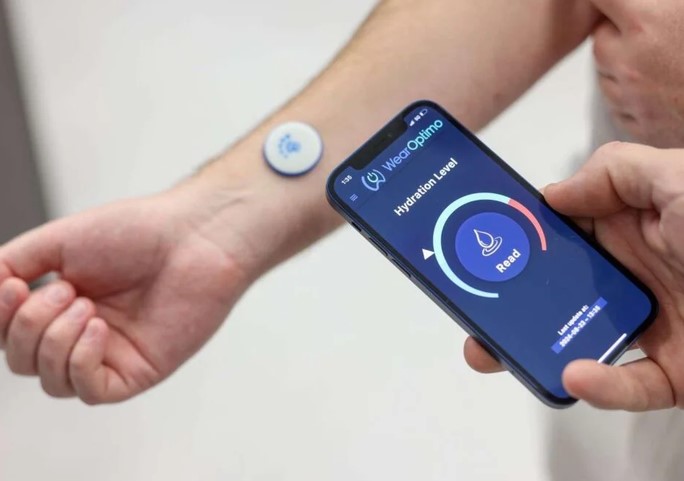
Modern wearable hydration monitors change this dynamic entirely. By capturing continuous biometrics direct from your skin, these devices bridge the gap between high-level performance data and actual physiological needs.
How Do Wearable Hydration Monitors Actually Work?
To understand how these tiny sensors detect fluid shifts beneath your skin, it helps to look under the hood. The technology behind wearable hydration monitors relies primarily on two non-invasive methods: microfluidic sweat analysis and optical/impedance spectroscopy.
1. Microfluidic Sweat Analysis
Think of microfluidic patches like a miniature plumbing network attached to your skin. As you exert yourself, micro-channels in the patch draw in microscopic amounts of sweat via capillary action.
Inside these channels, embedded chemical sensors react with specific ions in your sweat:
-
Sodium ($\text{Na}^+$) and Chloride ($\text{Cl}^-$) balance.
-
Potassium ($\text{K}^+$) levels.
-
Lactate concentrations for fatigue tracking.
As these ions flow over the sensors, small color changes or electrical signals are generated. The device reads these signals and translates them into actionable data on your smartphone screen, telling you precisely how much fluid—and which electrolytes—you need to replace.
2. Optical & Bioelectric Impedance Spectroscopy
For continuous, day-long tracking without needing active sweat production, non-invasive optical sensors step in.
-
Optical Sensors: Similar to pulse oximeters, these use light wavelengths to pass through the outer layers of the skin. Water absorbs light differently than surrounding tissues, allowing the sensor to detect subtle fluctuations in fluid volume within intercellular spaces.
-
Bioelectric Impedance Analysis (BIA): These sensors send a micro-current—so tiny you won’t feel it—through your skin. Because water conducts electricity much better than fat or dry tissue, variations in electrical resistance reveal your body’s current fluid density.
Analogy: Think of your body like a sponge soaked in saltwater. Microfluidic sensors act like a tiny laboratory analyzing the droplets squeezed out of the sponge, while optical and impedance sensors act like a smart camera measuring how plump or dry the sponge looks from the outside.
Key Benefits for Everyday Fitness and Health Enthusiasts
You don’t need to be an elite triathlete to benefit from continuous fluid tracking. The applications extend far beyond extreme endurance sports into daily wellness.
Peak Athletic Performance
Dehydration reduces blood plasma volume, forcing your heart to work significantly harder to pump blood through your veins. By using a wearable hydration tracker, athletes can implement personalized hydration strategies, replenishing precise volumes of fluids before performance degradation sets in.
Cognitive Clarity and Productivity
Even mild dehydration disrupts short-term memory, mood, and concentration. Office workers, drivers, and students often mistake mid-afternoon dehydration for fatigue or hunger. Real-time alerts remind you to drink before brain fog sets in.
Faster Recovery Times
Rehydrating with plain water after heavy electrolyte loss can lead to hyponatremia (dangerously low blood sodium). Hydration wearables inform you whether you simply need water or a specific electrolyte mix to recover efficiently.
Pro Tips & Hidden Pitfalls: A HealthTech Insider’s Guide
Having evaluated dozens of early prototypes and commercial models over the past decade, I’ve noticed key nuances that marketing brochures rarely mention.
Pro Tips for Maximum Accuracy
-
Placement Matters: Skin thickness, hair density, and sweat gland distribution vary dramatically across the body. Follow manufacturer recommendations strictly—placing a patch on your forearm versus your lower back can yield noticeably different baseline readings.
-
Establish Your Baseline First: Allow the device 3–5 days to collect baseline data under normal conditions before relying on it during intense heat or high-stress environments.
-
Account for Environment: High humidity slows sweat evaporation, which can temporarily affect skin-surface sensors. Adjust your targets when switching between indoor air-conditioned gyms and humid outdoor trails.
Hidden Pitfalls to Watch Out For
-
The “Water-Only” Trap: Relying on a monitor while drinking pure water during heavy sweating sessions can dilute your electrolyte balance. Pay attention to electrolyte recommendations, not just fluid volume.
-
Over-reliance on Notifications: Tech should inform your intuition, not replace it. If your body signals extreme fatigue or heat distress, stop and rest, even if the app screen claims your hydration levels are green.
-
Sensor Lifespan Costs: Some microfluidic patches are single-use disposable items. Always check the ongoing cost of replacement consumables before committing to a specific device platform.
What the Future Holds: Continuous Metabolic Tracking
Where is this technology heading over the next few years? We are fast approaching an era of fully integrated biosensing ecosystems.
Future wearable hydration monitors will likely be embedded directly into standard smartwatches, smart clothing, and even imperceptible skin tattoos. We will see deeper integration with smart home appliances—where your wearable communicates directly with your smart water bottle or refrigerator to dispense customized electrolyte formulations automatically.
+---------------------------------------------------------------+
|             THE FUTURE OF INTEGRATED HEALTH TECH              |
+---------------------------------------------------------------+
|  Skin/Wearables Sensors   -->  Continuous Biomarker Scan      |
|  AI Analytics Engine      -->  Predictive Hydration Needs     |
|  Smart Appliances         -->  Auto-Formulated Electrolytes   |
+---------------------------------------------------------------+
The line between clinical diagnostics and consumer wellness will continue to blur, empowering individuals to take complete control of their personal health data.
Final Thoughts
Hydration tracking is no longer just about counting how many glasses of water you drink a day. It’s about understanding your body’s unique physiological footprint in real time. Wearable hydration monitors eliminate the guesswork, giving athletes, professionals, and health-conscious individuals a powerful tool to optimize performance, prevent fatigue, and improve recovery.
As the technology continues to mature, staying ahead of fluid imbalance will be as effortless as glancing at your wrist.
Over to You: Have you experimented with wearable health sensors or continuous hydration trackers during your workouts? What feature would make a hydration monitor an essential part of your daily routine? Drop your thoughts and questions in the comments below!